Lessons from Japan
InsightsAs I travelled up Japan's east coast in a local train, the crashing waves of the Philippine Sea to my right and a tsunami warning card in my hand, I reflected on Japan’s juxtaposition of calm order against the constant threat of natural disasters.
This duality is striking: a society deeply rooted in preparation and resilience, balanced by a profound appreciation for beauty and impermanence. It serves as a reminder that all landscapes are vulnerable in today’s climate and ecological emergency. Whether wildfire, flood, or drought, our role as landscape architects is to design with resilience as the lifeline.
This reflection resonates strongly with my current journey of transition—stepping into the new year as Studio Director at Planit. Rather than drafting resolutions, I’ve turned to lessons from my recent trip to Japan. These principles, deeply rooted in Japanese culture, offer profound insights for crafting landscapes that are not only regenerative but designed to thrive in the face of uncertainty.

Ikigai: Designing with Purpose
Ikigai, the Japanese concept of finding joy and purpose, challenges us to consider the deeper "why" behind our work. It asks us to align passion, mission, vocation, and profession. For landscape architects, ikigai is about creating spaces that serve communities and ecosystems alike.
Designing with ikigai means addressing the critical needs of our time—climate adaptation, ecological restoration, and social equity—while also crafting places that inspire and uplift. Purposeful landscapes, rooted in intent, can act as lifelines for the people and environments they serve.

Shibui: Simplicity with Depth
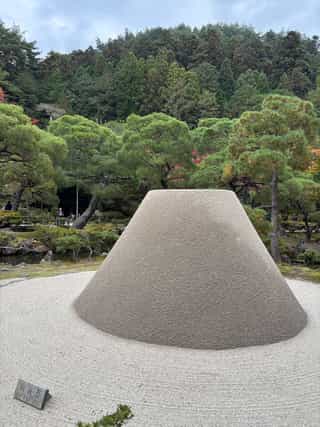
Shibui, the aesthetic of understated elegance, teaches us that simplicity often conceals complexity. In Japanese gardens, this is evident in the seemingly effortless balance of elements that embody years of refinement and thought.
In landscape design, simplicity can mask intricate systems of resilience. Rainwater harvesting, urban cooling solutions, or soil restoration methods may be invisible to the casual observer but are integral to a space’s function and sustainability. A truly shibui landscape works hard while appearing beautifully effortless.
Kintsugi: Finding Beauty in the Broken
The art of kintsugi—repairing broken pottery with gold—teaches us to embrace flaws as part of an object's history. On Naoshima Art Island, the principle of kintsugi is applied on a grand scale. This small island in the Seto Inland Sea, once marred by economic and environmental decline, has been transformed through cultural and ecological restoration.
World-class art installations have rejuvenated Naoshima, turning its scars into strengths. This is a powerful metaphor for regenerative landscapes, where healing ecological damage and reimagining degraded spaces can yield vibrant, thriving environments. From reusing materials to preserving cultural heritage, landscapes that embody kintsugi remind us that restoration can also create something new and beautiful.

Wabi-Sabi: The Beauty of Impermanence
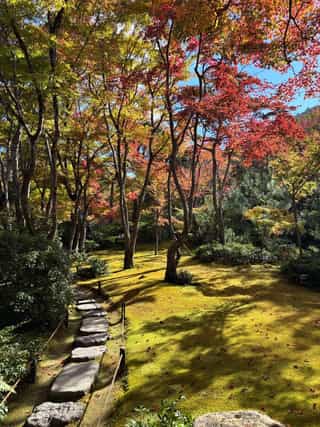
Japan’s gardens, with their weathered stones, moss-laden paths, and aged wood, embody wabi-sabi, the beauty of imperfection and transience. These spaces invite us to embrace change, renewal, and the inevitability of decay.
In landscape architecture, wabi-sabi encourages us to work with nature’s cycles. Regenerative landscapes that allow for adaptation—such as floodplains that shift with rising waters or green roofs that evolve over time—reflect this ethos. By designing for impermanence, we not only honour the earth's rhythms but also build resilience into the fabric of our work.
Fureai: Shared Responsibility
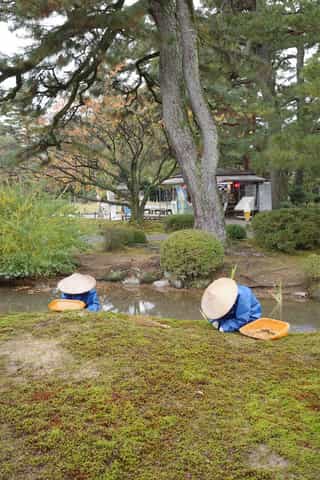
Fureai, the mutual bond between people, highlights the collective care that sustains Japan’s landscapes. Initiatives like fureai kippu, where community members exchange care as social currency, reflect a deeper connection to shared spaces.
In Tokyo, a city of nearly 15 million, the absence of litter—even without public bins—underscores the cultural norm of shared responsibility. Watching a man pick up a crumb dropped by someone else reminded me of the collective effort required to maintain our landscapes. For landscape architects, this means fostering stewardship through community involvement and interdisciplinary collaboration. A landscape does not end at Practical Completion; like a garden, it requires ongoing care and attention.
As I embark on this new chapter as Studio Director, these lessons from Japan serve as a compass: designing with purpose, embracing impermanence, finding strength in restoration, fostering shared care, and creating spaces that endure with quiet simplicity.
The landscapes we craft must do more than survive; they must thrive- adapting, regenerating, and serving as lifelines for the challenges ahead. Inspired by Japan’s thoughtful integration of culture, ecology, and community, I look forward to applying these principles in creating purposeful and resilient landscapes.
Working within the fine window of designed order and the ever-present climate and ecological emergency, a moving train where there isn’t always a cute panda pointing to the exits.
Related Thoughts

Regenerative Urbanism - Principle 1: Designing for co-evolution
Regenerative Urbanism - Principle 1: Designing for co-evolution
Restorative Prison Landscapes
Restorative Prison Landscapes

Power of Networks