CyanLines – building an ecosystem movement.
NewsOn the 4thJune 1976, the Sex Pistols played their infamous gig at the Lesser Free Trade Hall in Manchester – now the Radisson Edwardian Hotel. 40 people were there, yet over the years the ‘I was there’ crowd grew to many hundreds of supposed attendees. Many who were there in 1976 went on to found some of the greatest bands Manchester, and the world, has ever seen. On the 10th September 2025, at Aviva Studios, home to Factory International and the Manchester International Festival, 600 people turned up to hear me, Tom Bloxham and Bev Craig launch our big idea for nature. We are, of course, not the Sex Pistols and our events had very different purposes.
The launch of CyanLines last week, down the road and round the corner, has been compared to the seminal event of 1976 by my dear friends Adrian Bentley and Dr Gemma Gerome (founder of Building with Nature).
I’ve given this comparison some thought over the last week, and flattered as I am (as I imagine are Tom, Bev and the Mayor of Greater Manchester, Andy Burnham), I believe there is a more appropriate comparison – not just because of the scale of ambition, but because of the scale of the disaster, and the challenge ahead.
On Saturday 13th July 1985, Live Aid was held in Wembley and Philadelphia, with 160,000 people across the two venues and nearly 2 billion watching world-wide.
The call from Bob Geldof was stark and direct – ‘Give us all your money. Now’.
The mission was bold and impossible-looking – to stop the famine in Ethiopia. What was achieved is the stuff of true legend, the impact permanent and self-sustaining.
In 1976, punk had a voice – it was loud and angry, shouting for system change.
In 1985, Live Aid gave the people of Ethiopia a voice to drive system change after the world had seen the harrowing images of their suffering on television and across the nation’s newspapers.
Nature has no voice.
In December 2024, the World Wildlife Fund’s (WWF) Living Planet Report set out the catastrophic 73% decline in the average size of global monitored wildlife populations in just 50 years. The 2023 State of Nature report showed that species studied have, on average, declined by 19% in the UK since monitoring began in 1970.
The devastation is taking place largely in silence, though we are waking up to the scale of the challenge – not quickly enough and with the absence of the system-change needed.
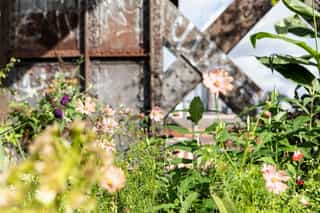
During the global pandemic, my dear friend the Ecologist Paul Chester wrote a book, titled ‘Where have all the flowers gone?’. In it he explores the changes to the ‘indicator species’ of the English countryside that have been lost, in plain sight. His synopsis reads:
Where have all the flowers gone?
Anyone with any interest in the countryside will be aware that we no longer see many of the flowers (also birds and animals) that we once did. But why? Also, why is it so important?
We are entering an age when we are rapidly losing touch with nature and the wider countryside. Whilst ever-increasing numbers of people are visiting the countryside, they often do so to pursue pastimes which have absolutely nothing to do with the natural world. Within my own profession, young ecologists have no idea just how much the countryside has changed. Even within the context of my own lifetime the changes have been dramatic.
We are at a fundamental crossroads. There have probably never been so many people who passionately care about the environment but at the same time there are so many who simply don’t. If we are absolutely honest, we have largely failed biodiversity. If we are to have anything left for future generations away from our most protected sites, we need to act quickly. As is increasingly being recognised, we have a duty to protect biodiversity for future generations.
In particular, there is a tendency to glorify rarity and there are many books that provide accounts of rare plants and animals and where to see them. The reality is, however, that many of the rare species of today were common species in the past. These books rarely, if ever, explore the reasons for rarity and more importantly, never promote solutions.
The book deliberately avoids being too technical. Whilst a certain amount of science is required, for countryside restoration to be successful we must achieve buy-in from as many people as possible. I have tried to adopt an approach which will appeal to a wide audience from amateur naturalists through to professional ecologists and countryside managers.
I think getting that synopsis and a sample chapter, offering to help Paul get the book published, was the true moment the seed of the CyanLines project was planted.
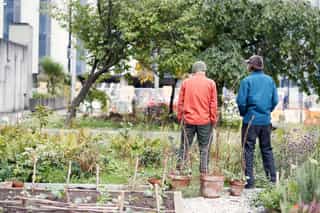
On Wednesday night I referenced my friends and former colleagues Joe Hartley and Ben Young – passionate disruptors in the truest sense, who’s gardening activities through the NOMA development project gave birth to the PLANT Co-Operative CIC and a new generation of city gardeners in Manchester. Through a failed pitch for Piccadilly Gardens, Ben and I launched the notion that the city needs to reinstate the post of ‘Head Gardener’ (we had one via the National Trust for a number of years), if it is to play its part in reversing this decline, and the linked challenges of Climate Change. This is when the CyanLines seed, germinated.
Comparisons between Tom and I, to Bob Geldof and Midge Ure are not for this article, or indeed for me to make with any seriousness, but we are all united in our quests to start a movement, not deliver a project. Tom and I are the seed sewers of the CyanLines.
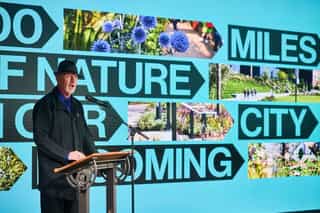
Tom’s ‘ask’ for funding was more subtle than Bob’s, but no less direct. As we compiled our list all those months ago, we looked to those who over the years had brought about the biggest transformations in the city’s fabric, both built and cultural. They were, to us, obvious, but it didn’t mean they would come on board. The speed and enthusiasm with which they did has humbled us both. Those private-sector partners are the ‘primary colonisers’ of the CyanLines.
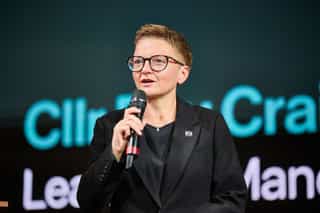
To succeed and sustain any movement, and to bring about the system change that is required, you need more than a good idea and some private money in the bank. You need the financial might, stability, reach, governance, and commitment of local, regional, and national government to work alongside you. Our public sector partners, led by Bev Craig and her team, are the deep ‘tap roots’ of the CyanLines.
From the very first engagements with the National Trust, at the Castlefield Viaduct and through the PLANT CIC, it was clear that their big plan could be best delivered as part of our bigger plan. Alongside the RHS and Natural England, they have big stakes in the urban landscape and share our audiences and ambitions. These national institutions, NGOs and charities are our CyanLines ‘pollinators’, and our vital delivery partners, too.
Growing and connecting the city, out of sight and with modest resources, the network of enthusiastic citizens in their community groups with their boots on the ground, create the most important layer of the CyanLines ecosystem – they are our ‘Mycorrhizal network’ stretching across the city to the towns and villages beyond.
In these early days and weeks, we will be articulating what the CyanLines project is, in all its forms and functions, and critically how everyone can get involved.
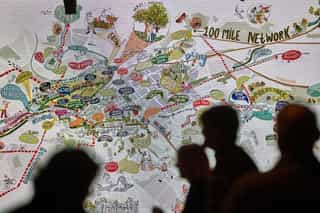
The easy first steps are in place – the first four routes are mapped and accessible through our partner’s at Komoot.
But CyanLines is not a walking or wheeling project; it is a way of giving us access to nature and to drive its recovery in urban contexts. It is a growing network of activity, learning, cohesion, shared resources, and projects – great and small – to drive our mission of delivering over 100 miles of nature in the city.
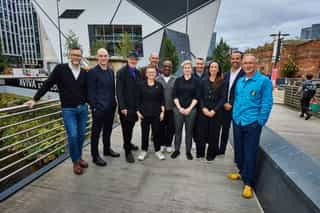
My personal thanks go out to every single person who has supported the mission so far, and especially that small group who made the launch on Wednesday 11th September happen.
Remember that date – it was the day a movement blossomed.
Read more about Cyan Lines here.
Related Thoughts
Power of Networks
Power of Networks
Planit’s Urban Design team create a new vision for Hull
Planit’s Urban Design team create a new vision for Hull
Climate Emergency and Public Realm Carbon Assessment Roundtable