Festival of Place - Social Impact
InsightsOur Creative Engagement Specialist Helen Winsland, and a couple of colleagues recently attended a two-day Festival of Place event exploring social impact within the built environment. The event brought together cross sector perspectives to examine how design, planning and policy can better support people, communities and long term wellbeing. The programme was of particular interest as it relates directly to the social outcomes and enabling conditions that Planit’s Regenerative Design Tool is designed to structure, target, and then communicate.
The event covered a wide range of topics, including the broader social value of retrofit beyond energy performance, the potential of affordable housing to deliver wider community benefit, and how spatial design influences diversity, comfort and inclusion - particularly in university settings, prompting a re‑evaluation of open‑plan spaces. Speakers also explored spatial justice, collaboration across healthcare, education and urban design, the role of community spaces in regeneration without gentrification, and the social and cultural infrastructure that supports adolescents.
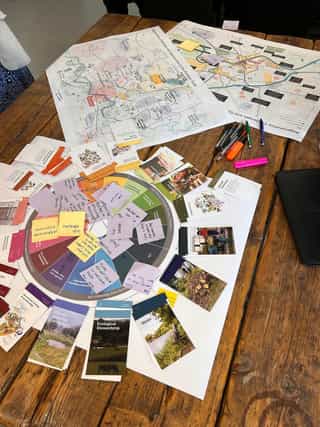
Planit's Regenerative Design Tool in use at a Regeneration Brainery workshop.
A key theme was trust. Speakers highlighted that society faces a trust deficit rather than an information deficit: people need to understand the purpose, benefits and human stories behind projects, not simply more data. Trust is built through relationships, community leaders and local organisations, and by valuing lived experience alongside technical evidence. The decline of civic spaces such as libraries and community centres was noted as a loss to collective dialogue, while citizens’ assemblies and strong feedback loops were seen as vital to restoring confidence and accountability.
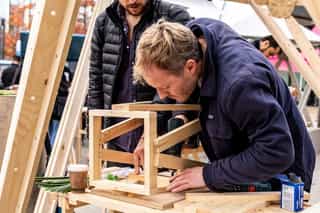
Students taking part in a community building workshop, in collaboration with Standard Practice as part of Planit's MMU Public Realm consultation.
The dual aspects of ‘Trust’ and ‘Civic Infrastructure’ are framed as the often-invisible operating system that determines whether a place thrives socially within Planit’s Regenerative Design Tool – Participation (giving people a voice in shaping the places they inhabit), Vibrant Commons (how a place is owned, governed, financed, and programmed) and Belonging (connection to place and each other) all form part of the tool’s ‘Thriving Communities’ quadrant.
The Tool’s ‘Building Healthy Neighbourhood’ spans wellbeing, homes, connectivity and joy in place – as essential elements of how places, and neighbourhoods enable people to thrive. The ‘Belonging’ dimension addresses ‘designing to meet the needs of everybody and fostering connection to place and each other’, however, inclusivity was presented as complex and nuanced at the Festival.
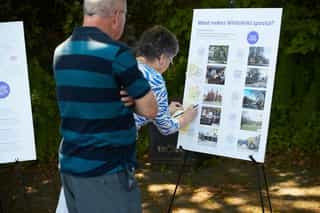
An outdoor consultation event in collaboration with Standard Practice, where locals had the opportunity to have their say on Planit's Whitefield masterplan.
Designing for “everyone” can result in spaces that meet no one’s needs. It was recognised that different groups experience space in distinct ways, including students from diverse ethnic backgrounds, women and girls navigating safety, neurodivergent people managing sensory overload, and adolescents seeking both freedom and security. Meaningful inclusion requires choice, flexibility and engagement, and must be systemic rather than superficial.
Finally, throughout the event, storytelling emerged as a powerful tool for impact. People connect with narratives more than metrics, and both large and small stories of change matter. Storytelling helps reveal hidden networks of care, challenges assumptions in data, and supports imagination, collective visioning and more human‑centred placemaking.
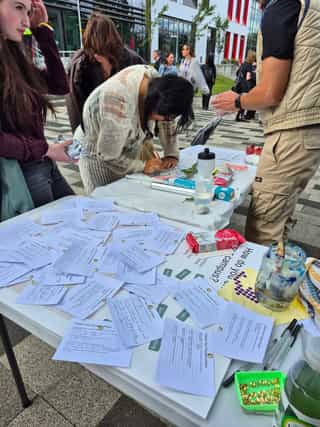
Students having their say on upcoming public realm works at the University of Salford, and taking part in a clay workshop.
Whilst Planit’s Regenerative Design Tool can employ a range of quantitative indicators to set targets and track progress, much of the Social Foundation inevitably focusses on qualitative aspects. Our Creative Engagement work is participatory and promotes open ended collaboration that enables all citizens to effect change. We’ll be sharing more soon, and in the meantime considering how more storytelling, tales and narrative histories can enrich and be woven into our approach.
Related Thoughts
Power of Networks
Power of Networks
Restorative Prison Landscapes
Restorative Prison Landscapes

Lessons from Japan