Planting for a Healthy Future
InsightsSophie Parker-Loftus, one of Planit’s Studio Director, is an award-winning Landscape Architect and qualified horticulturalist. She is leading on a number of high-profile public realm projects across the North-West, including Wythenshawe and Eccles. Her projects interweave regenerative principles with horticultural expertise within the urban fabric, aiming to create better places for people and the planet.
As the impact of climate change is increasingly felt across our towns, cities and countryside, what we plant and where it’s planted is becoming a pre-requisite in successful place design rather than a nice to have. There is an abundance of benefits for adopting a green-first, nature-rich place design approach, but three stand out:
- Investment in plant biodiversity is critical for delivering Biodiversity Net Gain uplift, hitting mandatory targets, whilst also preserving native habitats and seamlessly knitting place changes into the existing landscape and wider green infrastructure network.
- The benefits of rich green spaces to people’s health & wellbeing are well researched and documented and it is encouraging to see both public and private developers increasing their investment into creating flourishing and healthy living spaces.
- Choosing the right planting species, rooted in best-fit landscape architecture vision, helps combat urban heating, flood reduction, carbon absorption and contributes to building resilient cities.
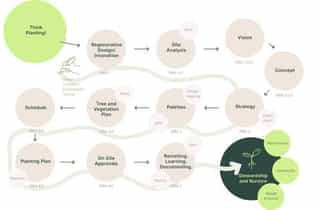
Think Planting: The Planting Process
As we move through the RIBA stages from site analysis, vision concept, strategizing, colour palettes to site approval – our planting process is rooted in regenerative design and innovation.
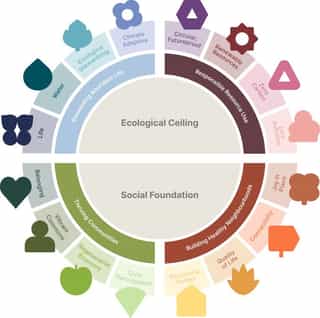
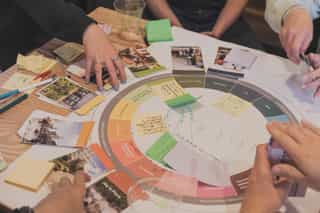
Planit’s Regenerative Design Tool considers a place and project from a whole-systems perspective and maximise regenerative impact across a complete spectrum of sustainability dimension. The Regenerative Design Tool guides planting strategies; driven by a desire to improve quality of life and joy, climate resilience and social stewardship.
The Regenerative Design framework is composed of eight dimensions under the ecological ceiling, and a further eight dimensions within the Social Foundation. By identifying beneficial linkages between, we can reveal how interventions in one dimension generate secondary benefits across others – creating reinforcing relationships that amplify impact.
Planting choices are determined by looking at species that can adapt over time with increasing temperatures, with less water demand and create a sense of joy and belonging for communities.
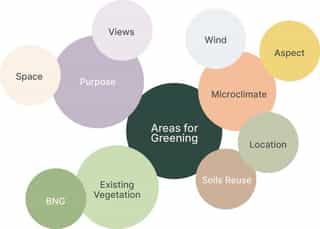
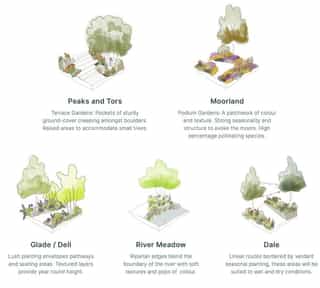
Understanding the existing space – green infrastructure, vegetation on site, microclimate, wind, soil and carbon reduction – are key criteria for planting design. The surrounding landscape of a place also plays a determining factor in place vision and planting direction. The regeneration of Oldham Town Centre, Buxton and Royal Albert Docks are three notable projects where this is evident. Oldham, located in Greater Manchester, has taken inspiration from the native plants that surround it in the Pennines whilst looking at climate resilient species.
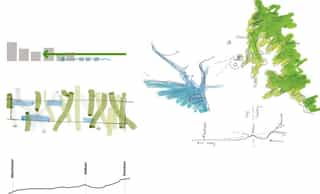
Likewise, the regeneration of the historic spa town of Buxton, located in the Peak District National Park, Derbyshire, has taken planting inspiration from the river meadows, moulins and peaks that surround it.
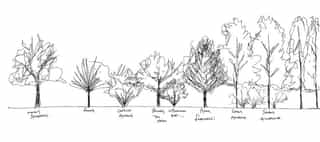
Like plants, trees are essential to our British landscapes. Not only do they act as vital carbon sinks locking it away for centuries but are vital for reducing flood risks. Trees and natural habitats provide essential food and shelter for species, offering some protection from the changing climate whilst providing significant benefits to people’s health and wellbeing. Planting new trees is now crucial for reaching environmental targets and tree mapping, of legacy and new trees, is an essential design tool that helps Planit’s Landscape Architects to deliver:
- A robust overview to building and human scale
- A proportional layer of tree coverage according to height and width
- Biodiversity support for the local identity
- Effective climate resilience
- Seasonal interest for a place
- -Habitat value
Several factors need to be considered when building urban tree strategies and planting design and specifications, including: client aspirations, budget, maintenance and management, timing of planting, available soil volume, canopy mapping, setting , architectural and human scale, ephemeral qualities, seasonal change, colour and above all the joy in place and what nature can offer.
Like most of our projects, planting starts with a humble sketch
For more planting knowledge, tune in to watch Sophie’s recent presentation to the Urban Design Learning ‘Planting Process & Specification: A Designer’s View here.
If you’d like to talk to Sophie about planting or tree strategies for a project, please contact her at spl@planit-ie.com or LinkedIn.
Related Thoughts
Power of Networks
Power of Networks
Planit’s Regenerative Design Tool Launches
Planit’s Regenerative Design Tool Launches
Festival of Place - Social Impact