Queen Elizabeth Olympic Park Climate Emergency Design Guidance
NewsPlanit releases LLDC-commissioned Climate Emergency Design Guidance to support the future resilience of London’s Queen Elizabeth Olympic Park.
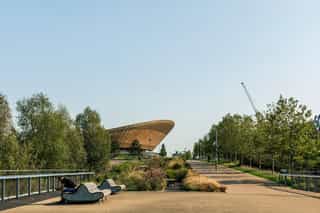
2012 was the “greenest Olympic games ever” [Commission for a Sustainable London 2012], leaving London with the largest new urban park for over 150 years. Since then, the LLDC has continued to pioneer sustainability in the landscaped environment. As part of a major update to the official Queen Elizabeth Olympic Park (QEOP) Park Design Guide, it selected Planit to develop the Climate Emergency Design Guidance - a practical guide targeted at developers and designers delivering London’s future public spaces.
In the next 20 years, the Greater London Authority’s London Environment Strategy aims to ensure that more than half of London will be green and the city’s tree canopy cover increases by 10 per cent. The capital’s public spaces have the potential to be a powerful mitigator of climate change in the city – if they are designed with rigorous whole-life carbon, biodiversity, and nature-based solutions objectives in mind.
To date, the response of the built environment sector to address the climate emergency – to which it contributes close to 25% [UK Green Building Council] of our greenhouse gas emissions – has been focussed upon buildings. The spaces between buildings remains a significant blind-spot for the industry.
Planit’s Design Guidance will help practitioners working across London and the UK to deliver low carbon schemes and chart a course towards climate positive landscapes, through:
- Analysing the climate impacts of landscape design, supply chains, and construction
- Setting out recommendations related to emerging policy, regulation and industry best practice - including Whole Lifecycle Carbon Accounting; Full Nature Accounting; and embedding resilience through Green Infrastructure and Nature-based Solutions
- Highlighting the Climate Positive Design Toolkit for the assessment of embodied carbon
- Accelerating progress towards a 1.5°C-aligned future by inspiring practitioners to develop their own embodied carbon reduction strategies and methodologies.
The LLDC commissioned Planit to produce an evidence base and supporting document on embodied carbon following a series of discussions and roundtables with leading built environmental specialists, including landscape architects, environmental consultants, engineers and manufacturers. A significant amount of supporting research and discussion with suppliers and fabricators has led to detailed embodied carbon and circular economy information being brought to create a comprehensive specification document.
The resulting Climate Emergency Design Guidance and updated Queen Elizabeth Olympic Park Design Guide form part of a suite of LLDC policy and guidance documents that practices involved in delivering new development within the LLDC estate will consult. Specific topics in the Guidance include: how to approach embodied carbon assessment; how to pursue low-carbon design and development strategies; and how to maximise the carbon sequestration potential of green infrastructure. Planit’s Decision Making Hierarchy offers further practical principles for delivering low carbon design and addressing key design questions such as – Build Nothing - is the development the best solution?; Build Less – use fewer materials and elements; and Build Collaboratively – meet net-zero by developing better data, knowledge sharing and celebrating exemplar projects.
James King, Director of Planit, says, “There is an urgent need for strong leadership to help London realise a 1.5°C-aligned and regenerative future. The climate discussion so far has been focused on the decarbonisation of buildings and carbon impacts. The potential for mitigation, and resilience, of the spaces between them has been largely ignored, which has to change. Enlightened clients such as LLDC are waking up to the potential for them to deliver transformative change.”
Pippa Henshall, LLDC’s Senior Landscape Design Manager, said: “Planit’s work to help inform the update to the Park Design Guide in light of the climate emergency and the standalone Climate Emergency Design Guidance will allow LLDC to better understand the embodied carbon in 10 of the most specified materials and products in the Park, including surfacing and street furniture. It will also help development teams within the Estate to make informed choices in relation to carbon building on the legacy of sustainable development delivered to date within the LLDC area.”
Jacob Heitland, Director of Climate Action, London Borough Newham, adds, "As one of the areas most vulnerable to heat and to flooding, we know nature and public spaces can help to mitigate climate impacts and protect us from them. Newham’s Just Transition Plan calls for all our neighbourhoods to be nature-filled and resilient, with the Queen Elizabeth Olympic Park being an essential biodiverse corridor for Stratford and East London, and one we need to nurture strategically as a climate, as well as community, asset."
Ben Webb, Regenerative Lead at Planit, comments, “The landscape architect decisions made at a project’s inception and concept design stage have the biggest impact on final climate outcomes. By supporting design and development professionals we hope to unlock a collective and critical shift towards sustainability through landscape, ensuring that both environmental, as well as social considerations are integrated into every stage of the process.”
Related Thoughts
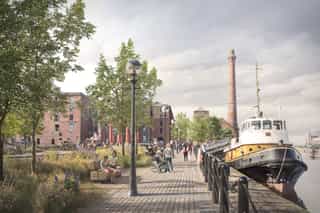
Royal Albert Dock Liverpool reveals first look at plans to enhance public realm
Royal Albert Dock Liverpool reveals first look at plans to enhance public realm
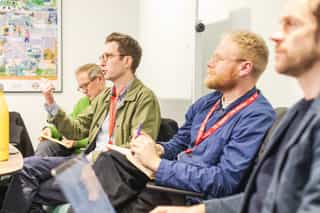
Climate Emergency and Public Realm Carbon Assessment Roundtable